
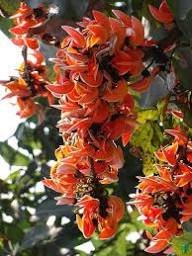
What is Palash?
Palash, known for its striking orange ‘flame of the forest’ flowers, is a tree whose bark, seeds and flowers are traditionally used in Ayurveda for digestive and skin support.
Traditional Uses & Benefits of Palash
- Seeds traditionally used to support a healthy gut.
- Bark traditionally used for digestive comfort.
- Flowers traditionally used to support skin health.
- Traditionally used to support healthy elimination.
- Used in classical formulations for general detoxification support.
Ayurvedic Perspective on Palash
Palash is mainly Kapha and Pitta pacifying, its astringent-bitter, cooling qualities supporting tissue toning and digestive cleansing; Vata-dominant individuals should use it moderately.
Ayurvedic Lifestyle & Usage Tips
- Use palash seed or bark preparations only under practitioner guidance, particularly for digestive concerns.
- Use flower-based preparations for skin support as classically advised.
- Follow a short, supervised course rather than continuous unsupervised use.
- Combine with a light, easily digestible diet during use.
Precautions & When to Consult a Doctor
⚠️ Please Note: Palash seeds have a strong traditional action on the gut and should not be self-administered for suspected intestinal parasites; consult a doctor for proper diagnosis and treatment.
The Ayurvedic Approach at Ayurvedachary Guruji Dr. Govind
At Ayurvedachary Guruji Dr. Govind, we believe every herb works best as part of a personalised care plan that considers your unique Prakriti (constitution), current imbalance and lifestyle, rather than as an isolated home remedy. Palash can be a valuable part of this approach when used correctly and consistently.
Want personalised Ayurvedic guidance on using Palash safely and effectively for your health goals? Book a consultation with Ayurvedachary Guruji Dr. Govind or explore our Panchakarma Chikitsa programs.
Disclaimer: This article is for general educational and informational purposes only, based on classical Ayurvedic principles. It is not a substitute for professional medical diagnosis, treatment, or emergency care. Please consult a qualified doctor for diagnosis and treatment, and consult Ayurvedachary Guruji Dr. Govind for a personalised Ayurvedic care plan alongside your regular medical treatment.