
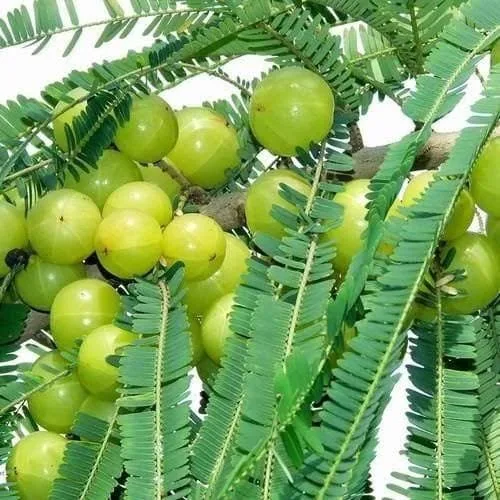
What is Amla?
Amla, or Indian Gooseberry, is considered one of the finest Rasayana fruits in Ayurveda and a key ingredient of the classical formulation Triphala. It is prized for its exceptionally high natural vitamin C content and sour-yet-balancing taste.
Traditional Uses & Benefits of Amla
- Traditionally used to support natural immunity and overall vitality.
- Supports healthy hair, skin and eyesight according to classical texts.
- Used to aid digestion and support a healthy gut.
- Considered supportive for maintaining youthful energy as part of daily Rasayana practice.
- Often included in formulations aimed at balancing all three doshas.
Ayurvedic Perspective on Amla
Amla is unique in Ayurveda as it is considered Tridoshahara – balancing Vata, Pitta and Kapha together – because it carries five of the six tastes (all except salty) along with a cooling potency that soothes Pitta while its astringency supports Kapha and Vata.
Ayurvedic Lifestyle & Usage Tips
- Take 1 teaspoon of amla powder with warm water or honey in the morning.
- Fresh amla juice, diluted with water, can be taken on an empty stomach.
- Amla murabba (preserve) is a traditional way to enjoy it through winter.
- Combine with other Triphala ingredients for a balanced daily Rasayana routine.
Precautions & When to Consult a Doctor
⚠️ Please Note: Amla is generally very well tolerated, but very high doses may cause acidity in sensitive individuals, and those on blood-sugar or blood-pressure medication should monitor levels when starting regular use. Seek medical advice if you notice unusual reactions.
The Ayurvedic Approach at Guruji Govind
At Ayurvedacharya Guruji Govind, we believe every herb works best as part of a personalised care plan that considers your unique Prakriti (constitution), current imbalance and lifestyle, rather than as an isolated home remedy. Amla can be a valuable part of this approach when used correctly and consistently.
Want personalised Ayurvedic guidance on using Amla safely and effectively for your health goals? Book a consultation with Ayurvedacharya Guruji Govind or explore our Panchakarma Chikitsa programs.
Disclaimer: This article is for general educational and informational purposes only, based on classical Ayurvedic principles. It is not a substitute for professional medical diagnosis, treatment, or emergency care. Please consult a qualified doctor for diagnosis and treatment, and consult Ayurvedacharya Guruji Govind for a personalised Ayurvedic care plan alongside your regular medical treatment.